

Table of Contents:
1. A Surprising Eco-Friendly Gardening Trend Takes Root in Winnipeg
2. Why Winnipeg Gardeners Are Making the Switch
3. The Benefits of Wool in Your Garden
3.1 Natural Water Retention That Saves Time and Money
3.2 Slow-Release Nutrition for Healthier Plants
3.3 Natural Weed Suppression Without Chemicals
3.4 A Gentle Deterrent for Slugs and Pests
4. How to Use Wool Pellets in Your Winnipeg Garden
4.1 Around Perennials and Shrubs
4.2 In Vegetable Gardens
4.3 In Raised Beds
4.4 Improving Winnipeg's Heavy Clay Soil
5. Supporting Sustainable Gardening in Manitoba
5.1 Reducing Waste, Supporting Local Farmers
5.2 Eco-Friendly Gardening That Actually Works
6. Frequently Asked Questions
7. Conclusion
1. A Surprising Eco-Friendly Gardening Trend Takes Root in Winnipeg
If you've visited a local garden centre recently or scrolled through Winnipeg gardening groups on social media, you've likely noticed something unexpected: bags of wool pellets sitting alongside compost and fertilizer.
At first glance, using sheep's wool in a vegetable garden or flower bed sounds unusual. Wool belongs in sweaters, not tomato plants, right?
But a growing number of Winnipeg homeowners are discovering that this humble natural fibre offers remarkable benefits in the garden. From improving soil structure to conserving water and reducing weeds, wool is proving to be a versatile, eco-friendly tool that works with our unique prairie conditions.
Whether you garden in River Heights, Charleswood, or nearby communities like East St. Paul or Headingley, wool could become a valuable addition to your gardening toolkit.
Related Reading: Learn some ways to supercharge your Garden soil with these household items
2. Why Winnipeg Gardeners Are Making the Switch
Winnipeg's gardening season comes with distinct challenges: hot, dry summers, drying winds, and notoriously heavy clay soils that crack in drought and turn to concrete after rain. Keeping plants healthy through July and August often requires constant watering, regular fertilizing, and endless weed control.
Wool addresses several of these challenges naturally:
- It holds water like a sponge, reducing watering frequency.
- It releases nutrients slowly, feeding plants without the risk of chemical burn.
- It suppresses weeds by creating a natural barrier.
- It improves soil structure over time, especially when combined with compost.
For gardeners looking to reduce their reliance on synthetic products while still achieving strong results, wool offers a compelling alternative.
Looking for practical, sustainable landscaping solutions that work in Winnipeg's climate? Sunshine Maintenance & Landscaping has been helping local homeowners for over 30 years with honest advice and quality workmanship.
Contact us today while we still have spots remaining in our 2026 production schedule.
Call (204) 229-9789 to speak with one of our Sunshine Maintenance & Landscaping Professionals.
we'll give you straightforward recommendations—no pressure, just honest advice.
Related Reading: Sunshine Maintenance & Landscaping recognized in 2026 as one of Winnipeg's best lawn care and landscaping companies
3. The Benefits of Wool in Your Garden
3.1 Natural Water Retention That Saves Time and Money
One of wool's most impressive properties is its ability to absorb 20 to 30 times its own weight in water.
Instead of rainwater quickly evaporating from the soil surface, wool acts like a sponge beneath the mulch. That means:
Plants stay hydrated longer between waterings.
Roots experience fewer moisture swings, reducing stress.
Vegetables suffer less heat damage during Winnipeg's hottest weeks.
Raised beds—which dry out even faster than traditional gardens, stay moist longer.
When soil moisture remains consistent, plants develop stronger root systems, produce more flowers, and deliver better vegetable yields. Less transplant shock means healthier starts, too.
Pro tip for Winnipeg gardeners: Combine wool pellets with a layer of shredded bark or straw mulch for maximum moisture retention during our driest months.
3.2 Slow-Release Nutrition for Healthier Plants
Wool contains significant amounts of:
- Nitrogen — essential for leafy growth
- Potassium — supports flowering and fruiting
- Sulfur — aids in protein production
As soil microbes gradually break down the wool fibres, these nutrients become available to plants over many months. Unlike quick-release synthetic fertilizers that can cause excessive, weak leafy growth, wool feeds the soil gently and steadily.
Gardeners often notice healthier, more balanced growth without the "soft" growth that attracts pests and diseases.
3.3 Natural Weed Suppression Without Chemicals
Does wool act as mulch? Absolutely.
Whether using loose wool or compressed pellets, it helps:
- Reduce evaporation from the soil surface.
- Moderate soil temperatures during heat waves.
- Suppress weed germination by blocking sunlight.
- Prevent soil crusting and erosion.
- Protect the soil surface during heavy rains.
That means less time watering and significantly less time pulling weeds, two benefits any Winnipeg gardener can appreciate.
3.4 A Gentle Deterrent for Slugs and Pests
Many gardeners report fewer slug problems after using coarse wool around susceptible plants like hostas, lettuce, and strawberries.
The rough fibres appear to discourage slugs from crossing them. While wool should not be considered a guaranteed pest control solution, it can become one helpful part of an integrated, eco-friendly gardening strategy.
Research is still ongoing, but early results—and gardener testimonials—are promising.
Related Reading: Surprising everyday kitchen helpers to keep pests and weeds at bay and to improve your soil.
4. How to Use Wool Pellets in Your Winnipeg Garden
One of Manitoba's best-known wool pellet producers is Long Way Homestead, which manufactures compressed pellets using local sheep's wool that might otherwise go to waste. These pellets are clean, easy to handle, and simple to apply.
4.1 Around Perennials and Shrubs:
- Scatter pellets around established plants.
- Water thoroughly.
The pellets expand as they absorb moisture and slowly begin feeding the soil.
4.2 In Vegetable Gardens:
Mix pellets into the top few inches of soil before planting. They're especially beneficial for:
- Tomatoes
- Peppers
- Cucumbers
- Squash
- Beans
These heavy-feeding vegetables thrive on consistent soil moisture throughout the growing season.
4.3 In Raised Beds
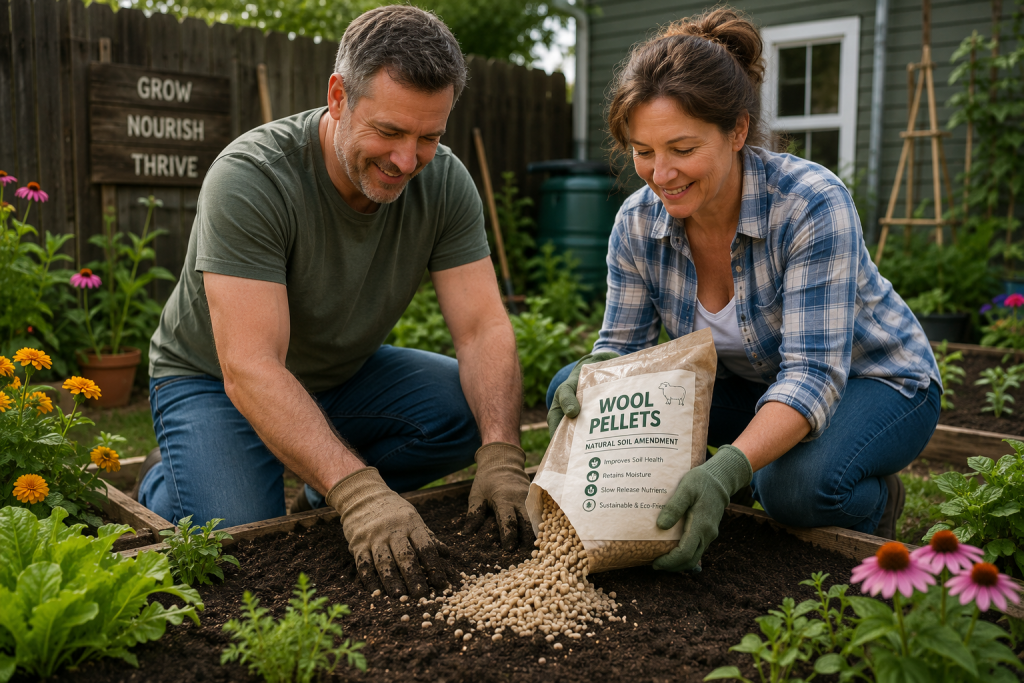
Raised beds lose moisture quickly because they drain faster than ground-level gardens. Mix wool pellets throughout the soil before planting, and consider adding another light application around the base of plants after they become established.
4.4 Improving Winnipeg's Heavy Clay Soil
Winnipeg is famous—or infamous—for its heavy clay soils. Clay often:
- Compacts easily, making root growth difficult.
- Drains slowly after rain, leading to waterlogged roots.
- Cracks during drought, damaging delicate root systems.
While wool won't magically transform clay into perfect loam overnight, it improves soil structure over time by increasing organic matter and encouraging beneficial soil biology. Combined with compost, it becomes an excellent long-term soil amendment.
For best results: Work wool pellets and compost into your clay soil in the spring, then add another light application in the fall to continue building organic matter.
Need help improving difficult clay soil or designing productive garden beds that thrive in Winnipeg's unique conditions? Sunshine Maintenance & Landscaping offers experienced advice, fair pricing, and no-pressure recommendations.
Contact us today and let's get your garden into tip-top shape for 2026.
Call (204) 229-9789 to speak with one of our Sunshine Maintenance & Landscaping Professionals.
Serving local homeowners for 30+ years. We'll help you find solutions that fit your property and budget
Related Reading: A practical guide to amending your Winnipeg soil
5. Supporting Sustainable Gardening in Manitoba
5.1 Reducing Waste, Supporting Local Farmers
Using wool isn't simply about growing bigger tomatoes. It's about using natural resources wisely.
Much of the lower-grade wool produced by sheep isn't suitable for clothing or textiles. Historically, some of it had very little commercial value and ended up as waste.
By converting that wool into garden products, we can:
- Reduce agricultural waste.
- Create additional income streams for Manitoba sheep farmers.
- Keep natural materials out of landfills.
- Replace synthetic, petroleum-based gardening products.
For environmentally conscious homeowners, that's another compelling reason wool has become increasingly popular.
5.2 Eco-Friendly Gardening That Actually Works
Sustainable gardening isn't about perfection. It's about making better choices where practical.
Combining wool with:
- Compost
- Native plants
- Mulch
- Efficient irrigation
- Healthy soil management
Creates landscapes that require less water, fewer chemicals, and less maintenance over time.
These are exactly the kinds of improvements many Winnipeg homeowners are looking for—beautiful, productive gardens that don't cost the earth.
Related Reading: Native Grass Ideas for Your Winnipeg Landscape Design
6. Frequently Asked Questions
Q: How long do wool pellets last in the garden?
A: Most pellets gradually decompose over one to two growing seasons, depending on moisture levels, microbial activity, and soil conditions.
Q: Can I use raw sheep's wool instead of pellets?
A: Yes, provided it hasn't been treated with chemicals and is reasonably clean. However, pellets are easier to spread evenly and are generally more convenient for most homeowners.
Q: Are wool pellets safe around pets and children?
A: Generally, yes. Wool is a natural, non-toxic product. However, curious pets should still be discouraged from eating large amounts of any garden amendment.
Q: Will wool pellets attract rodents?
A: No. Wool is not a food source for rodents, and the pellets do not attract them.
Q: Can wool pellets be used in container gardens?
A: Absolutely. They work very well in pots and planters, helping retain moisture in the limited soil volume.
7. Conclusion
Why are people putting wool in their Winnipeg gardens?
Because it works.
Wool helps retain moisture, slowly feeds plants, suppresses weeds, improves soil structure, and makes good use of a renewable local resource. It won't replace every gardening product, but it can become an excellent part of an eco-friendly gardening strategy.
If you're planning new flower beds, vegetable gardens, raised beds, or a complete landscape renovation, incorporating sustainable materials like wool can pay dividends for years to come.
Ready to create a healthier, more sustainable landscape?
Contact us today for a free estimate and expert guidance tailored to your property.
We're in your neighbourhood and we're ready to help with your garden.
No hard sell, just practical solutions that work.