

Table of Contents:
1. Introduction
2. Myth #1: Rock Salt is the Ultimate Winter Weapon
2.1 The Science of Melting & The Temperature Wall
2.2 The Concrete Corrosion Catastrophe
2.3 Winnipeg Eco-Friendly and Effective Alternatives
3. Myth #2: A Snow Fence in My Yard Will Magically Protect My Driveway
3.1 How Snow Fences Actually Work
3.2 The Scale and Placement Problem
3.3 Better Investments for Windblown Woes
4. Myth #3: Snow Shoveling is Just as Good as Snow Plowing in Winnipeg
4.1 The Muscle vs. Machine Showdown
4.2 The Compaction Conundrum and the Ice Base
4.3 When to Wield the Shovel, When to Call the Pros
5. Myth #4: The Later You Remove It, The Better (The "One Big Push" Fallacy)
5.1The Back-Breaking Physics of Heavy, Wet Snow
5.2 The Icy Glaze Gambit: Why Timing is Everything
5.3 The Proactive Protocol for Easier Winters
6. Myth #5: Any Winnipeg Snow Contractor With a Plow Can Handle the Job
6.1 Insurance, Insurance, Insurance!
6.2 The Hidden Dangers of Unmarked Assets and Curbs
6.3 What to Look for in a Professional Snow Removal Service Near Me
7. Conclusion
1. Introduction:
Hey there, fellow winter warrior! As the temperature drops and the first fluffy flakes begin their descent, a familiar sense of dread might be creeping in. It’s the annual battle of the driveway, the siege of the sidewalk. But before you gear up for another season of back-breaking labor and questionable strategies, let’s have a chat. I’ve been talking to Winnipeg snow shovelling and snow plowing experts, and let me tell you, the amount of folklore and straight-up bad advice circulating about winter maintenance is enough to make a polar bear shiver. We’re here to set the record straight, saving your back, your driveway, and maybe even your reputation with the neighbors. It all starts with understanding what truly constitutes dependable snow shovelling.

You see, not all winter wisdom is created equal. What your well-meaning uncle told you over Thanksgiving dinner might be the very thing leading to an icy, hazardous mess come January. Separating fact from fiction is the key to a safer, more manageable winter. This isn't just about aesthetics; it's about preventing injury, protecting your property, and ensuring you can get to work on time. To achieve this, you need the kind of proven, effective knowledge that only comes from years of experience—the kind you get from dependable snow shovelling and snow plowing contractors Winnipeg residents have come to rely on.

Contact us today for your free estimate.
So, grab a hot beverage, get comfortable, and let’s dive into the most persistent myths that are making your life harder. We’re going to tackle everything from the great salt debate to the real reason your driveway might still be a mess even after you’ve "cleared" it. By the end of this, you'll be armed with the cold, hard facts (pun intended) to conquer the season. Whether you're a DIY champion or looking for professional dependable snow shovelling services, knowing the truth will ensure you get the best results possible.

Our goal is to empower you with knowledge, making your search for efficient and affordable snow removal much more successful. Forget the old wives' tales and the "this is how we've always done it" mentality. It's time to listen to the professionals—the ones who have seen it all. We're talking about the insights from Winnipeg's best snow shovelling and snow plowing contractors, who know a thing or two about handling our unique Prairie winters.
2. Myth #1: Rock Salt is the Ultimate Winter Weapon:
Let’s start with the big one: the love affair with rock salt (sodium chloride). We sprinkle it on our steps, our walks, and our driveways like fairy dust, hoping it will magically vanish the white stuff. But here’s the bitter truth: rock salt is not a one-size-fits-all solution. In fact, relying on it blindly can be ineffective, expensive, and downright destructive.

2.1The Science of Melting & The Temperature Wall
Salt works by lowering the freezing point of water. Instead of turning to ice at 0°C, the saltwater mixture might need -6°C or -10°C to freeze. That’s great for a chilly morning, but what happens when our beloved Winnipeg thermometers plunge to -20°C or -30°C? The salt effectively gives up. It stops working entirely. You’re left with a useless, salty slush that will freeze solid into an even more treacherous, rock-hard icy patch. According to practical chemistry, sodium chloride loses most of its effectiveness below -10°C. So, all that money you spent on bags of salt during a deep freeze? Literally wasted.
2.2 The Concrete Corrosion Catastrophe
Now, let’s talk about what that salt is doing to your property. The chemical reaction that melts ice also creates a cycle of freeze-thaw stress within the pores of your concrete. This accelerates spalling, causing the surface to flake and crumble. The American Concrete Institute has published numerous findings on how de-icing chemicals contribute to concrete deterioration. Furthermore, the chloride ions are highly corrosive to metal. That means your car’s undercarriage, your garage door track, and any exposed rebar in your steps are being silently eaten away. It’s a slow, expensive decay you’re literally broadcasting across your assets.
2.3 Eco-Friendly and Effective Alternatives
So, what’s a responsible homeowner to do? First, mechanical removal is king. Getting the bulk of the precipitation off the ground before applying any de-icer is 90% of the battle. For the remaining slick layer, consider alternatives. Calcium chloride or magnesium chloride work at much lower temperatures than rock salt. While more expensive per bag, they are far more effective in severe cold, meaning you use less.
For a greener option, look into traction agents like sand, non-clumping cat litter, or specialized volcanic rock dust. These don’t melt anything, but they provide instant grip on icy surfaces. Another excellent pre-treatment is a brine solution (saltwater), which can be applied before a storm. It prevents the bond from forming between the ice and your pavement, making subsequent snow plowing or shoveling dramatically easier. It’s a strategy that many forward-thinking Winnipeg snow removal companies are now adopting for its efficiency and reduced material usage.
3. Myth #2: A Snow Fence in My Yard Will Magically Protect My Driveway:
This one is a classic. The logic seems sound: put up a barrier, and the drifts will pile up there instead of on my paved surface. It’s a concept borrowed from highways, where you see massive wooden fences protecting the road. So, you stick a cute little decorative picket fence along your property line and wait for a clear, drift-free winter. Spoiler alert: it doesn’t work.
3.1 How Snow Fences Actually Work
A snow fence doesn't act like a solid wall, stopping flakes in their tracks. Its genius is in its design; it's typically 40-50% porous. These intentional gaps allow wind to pass through, but it disrupts the wind flow, causing it to lose energy and drop its suspended frozen payload before the fence. The snow drifts on the upwind side, not the downwind side. The goal is to force the accumulation in a controlled area where it causes no harm, rather than blocking it entirely. For a homeowner, placing a fence right beside your driveway means you're just encouraging a drift to form… right beside your driveway, which doesn't help when the wind is swirling from multiple directions.
3.2 The Scale and Placement Problem
The effectiveness of a snow fence is entirely dependent on scale and precise placement. A standard highway snow fence is 4 feet tall and placed 30 to 50 feet away from the road it's protecting. To protect a single driveway, you'd need a significant fence placed a considerable distance into your neighbor's yard (which they might object to!). A small, 3-foot-tall fence placed 5 feet from your driveway simply doesn't have the scale or the fetch to alter wind patterns meaningfully. The wind will just jump over it or swirl around it, depositing the precipitation exactly where it always has.
3.3 Better Investments for Windblown Woes
Instead of investing in an ineffective fence, consider better strategies. For properties plagued by drifting, ensuring your final fall clean-up includes cutting back tall grasses and vegetation upwind can sometimes reduce the "launching point" for drifts. A more robust and permanent solution is planting a dense windbreak of trees and shrubs, like cedar or spruce, well upwind of your property. This is a long-term solution that also adds beauty and value.
For immediate results, the best defense against relentless drifts is a consistent clearing schedule with a reliable snow removal service near me. By clearing the area before drifts become established, you prevent them from setting up into hard, compacted walls. A professional plowing snow near me will have the powerful equipment to handle these challenging conditions efficiently, something a simple shovel and a misplaced fence can never accomplish.
4. Myth #3: Shoveling is Just as Good as Plowing:
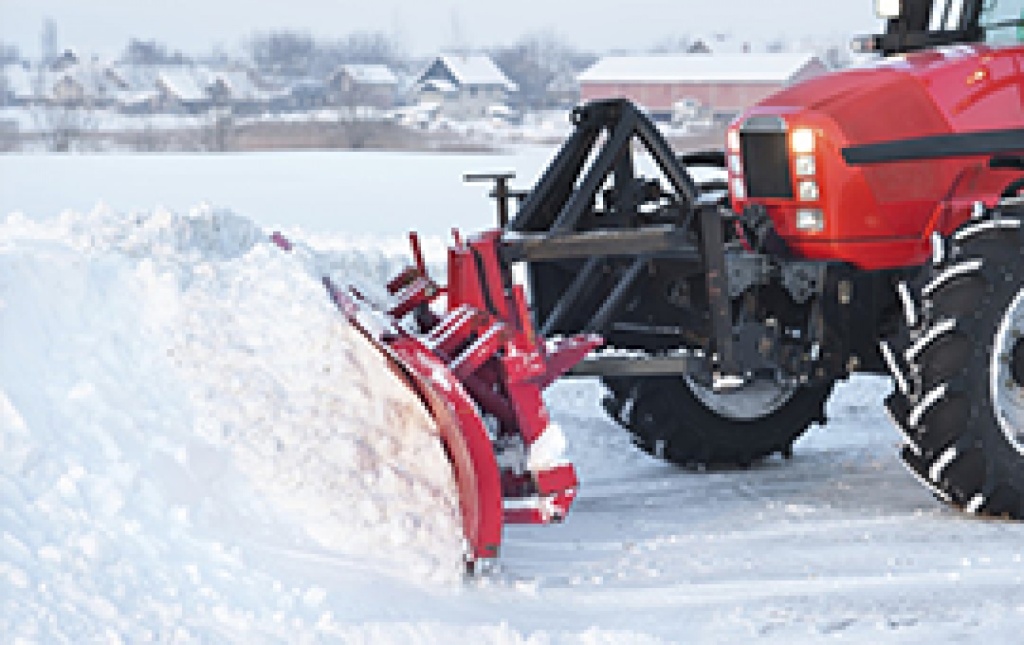
Ah, the age-old debate: human grit versus mechanical might. “I don’t need a plow service,” you might say, “I’m strong, I have a good shovel, and I enjoy the workout!” And hey, more power to you! For a light dusting of a few centimeters, the trusty shovel is a perfect tool. But when winter really flexes its muscles, insisting that shoveling is just as effective as snow plowing is like saying a hand-saw is just as good as a chainsaw for cutting down a giant oak tree. It’s a dangerous misunderstanding of scale and physics.
4.1 The Muscle vs. Machine Showdown
The primary advantage of a plow truck is power and speed. A commercial vehicle can clear a standard residential driveway in a matter of minutes, using a broad, angled blade to push the material away in a single, fluid motion. Shoveling the same area, even for a fit individual, can take 30-60 minutes of intense labor. This time difference is critical during a heavy, ongoing weather event. A plow service can make multiple passes to keep up with accumulation, while a person shoveling can quickly fall behind, leading to a much larger problem.
4.2 The Compaction Conundrum and the Ice Base
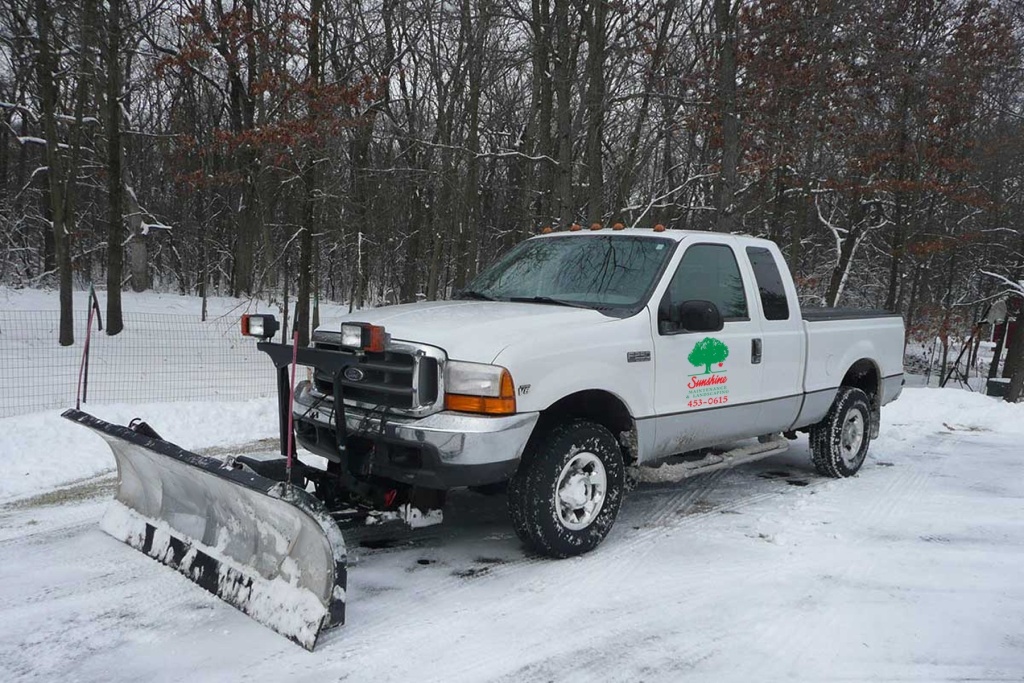
This is the most critical point that shoveling advocates miss. When you walk on the fallen precipitation to shovel it, you are compacting it. Every step, every pass with the shovel, presses it down. If the temperature is hovering around freezing, this compacted layer turns into a solid, icy base that is incredibly difficult to remove with a plastic shovel. You’re essentially creating your own personal ice rink. A plow truck, however, operates by clearing the material before it gets driven over and compacted. It glides over the surface, lifting and pushing the loose accumulation, leaving a clean pavement surface that is far less likely to develop an ice layer. This is a core reason why professional residential snow removal Winnipeg services provide a consistently cleaner and safer result.
Contact us today for your free estimate.
4.3 When to Wield the Shovel, When to Call the Pros
The shovel has its place! It’s ideal for:
Clearing steps and tight spaces where a plow can't go.
Tidying up the "windrow" or ridge left by a municipal plow at the end of your driveway.
Handling very light snowfalls where compaction isn't a concern.
But for any significant accumulation, especially over 5-7 cm, or for anyone with health concerns, snow plowing is the superior choice. It’s faster, prevents the ice-base issue, and is far less physically taxing. For businesses, it’s non-negotiable; Commercial snow plowing Winnipeg is essential for maintaining safe access for customers and employees and mitigating liability. Trying to shovel a large parking lot is simply not feasible.
Ready to chat about your snow management needs?
Between now and the end of January 2026, we're reserving a valuable Special Offer for the first 15 homeowners to book Sunshine’s snow removal services.
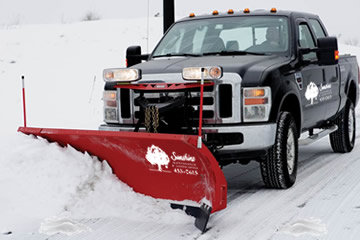
Reach out TODAY by call or text to: 204-229-9789 or click here to submit your information today to arrange a “no obligation” introductory phone call. We look forward to helping you with your yard.
5. Myth #4: The Later You Remove It, The Better (The "One Big Push" Fallacy):
“I’ll just wait until it stops falling and then clear it all at once.” We’ve all thought it. It seems efficient, right? One big effort and you’re done. Unfortunately, this strategy is a recipe for a herniated disc, a broken snowblower, and a driveway that resembles a bobsled track. Procrastination is the enemy of easy winter management.
5.1 The Back-Breaking Physics of Heavy, Wet Snow
Let’s talk weight. A mere 15 cm (about 6 inches) of fresh, fluffy snow on a 6-meter (20-foot) driveway weighs well over 500 kg (1,100 lbs.). Now, if that snow is wet and heavy—common in early and late season storms—that weight can easily double or triple. Waiting to move a literal ton of frozen water is not just hard work; it’s a significant health risk. The American Heart Association has repeatedly issued warnings about the sudden strain that shoveling heavy, wet snow places on the cardiovascular system, leading to a spike in heart attacks every winter.
To read an interesting article about the risks of DIY snow shovelling CLICK HERE.
Contact us today for your free estimate.
5.2 The Icy Glaze Gambit: Why Timing is Everything
The other huge risk is the "flash freeze." You go to bed, the precipitation is light and fluffy, so you decide to deal with it in the morning. Overnight, the temperature rises slightly, causing the top layer to melt. Then, just before you wake up, the temperature plummets, freezing the entire mass into a single, solid, impenetrable sheet of ice. Now, your shovel is useless, your snowblower will choke, and even a plow might struggle. Clearing in layers during a long-duration storm prevents this. By removing a few inches at a time, you never allow a thick, dense, or icy layer to form.
5.3 The Proactive Protocol for Easier Winters
The golden rule among professional snow removal services is to initiate clearing operations after 2-3 inches (5-7 cm) of accumulation has fallen during an ongoing storm. This "clear early, clear often" philosophy is the secret to a stress-free winter. It’s easier on your body, easier on your equipment, and better for your pavement. It prevents the formation of dangerous ice layers and ensures you’re never facing an insurmountable task. Signing up with a company that offers this proactive approach means you wake up to a clear driveway, no matter what happened overnight. It transforms winter from a battle into a managed event.
6. Myth #5: Any Contractor With a Plow Can Handle the Job:
In the frantic search for snow removal services near me after a big storm, it’s tempting to call the first number you see on a lamppost or a community Facebook page. “How hard can it be?” you think. “It’s just pushing white stuff with a truck.” This is, perhaps, the most costly myth of all. Hiring an uninsured, unprofessional “guy with a plow” can lead to massive property damage, unresolved disputes, and a whole lot of headaches.
6.1 Insurance, Insurance, Insurance!
This cannot be overstated. Any legitimate snow removal service will have comprehensive commercial general liability insurance, often for $2 million or more. Why does this matter? If that uninsured operator misjudges a turn and plows through your brand-new fence, your beautiful landscaping, or your car, who pays for it? You do. Your homeowner's insurance may not cover it, and the individual almost certainly won't have the funds. You are left holding the bag. Always, always ask for a certificate of insurance (COI) before signing a contract. A reputable company will provide it without hesitation.
What to do if Your Snow Shovelling And Snow Removal Contractor Does Damage to Your Winnipeg Property
6.2 The Hidden Dangers of Unmarked Assets and Curbs
A professional doesn’t just drive around pushing precipitation. They know how to read the terrain. They identify and avoid sprinkler heads, septic tank covers, and the delicate edges of curbs. An inexperienced operator, driving too fast or with a blade set too low, can rip up your lawn, shred your asphalt, and shatter concrete curbs. Repairing a damaged curb can cost thousands of dollars. The best Winnipeg snow removal firms train their drivers extensively on proper techniques to protect your property.
6.3 What to Look for in a Professional Snow Removal Service Near Me
So, how do you find the good guys? Look for these hallmarks of a professional operation:
A Professional Website and Contract: They have a clear, detailed service agreement that outlines triggers, response times, and pricing.
Proof of Insurance: As mentioned, this is non-negotiable.
Well-Maintained, Professional Equipment: Their trucks are clearly marked and look well-cared-for.
Positive Reviews and an Established Reputation: Look for companies with a long track record and positive testimonials on independent platforms.
Clear Communication: They explain their process and are easy to get a hold of.
Investing in a true professional for your driveway snow removal needs is not an expense; it’s insurance policy in itself. It guarantees the job will be done right, safely, and responsibly, protecting your most valuable asset—your home.
Contact us today for your free estimate.