


Snapshot:
- Spring yard work in Winnipeg can double as a serious workout.
- Tasks like raking debris, digging garden beds, spreading mulch, and mowing can burn 400–1000 calories per hour depending on effort level. But early-season yard preparation also requires planning around frozen soil, snowmelt, and heavy debris left from winter.
- In this guide you’ll learn when to start yard work in Winnipeg, how to prepare your lawn step-by-step, how to restore garden beds, and how to avoid common spring mistakes.
- Many homeowners begin enthusiastically but later realize the workload is heavier than expected. That’s why some choose seasonal maintenance programs where spring cleanup is included alongside regular lawn care and garden maintenance.
Table of Contents:
1. Introduction: Spring Yard Work in Winnipeg
2. When Can You Start Winnipeg Yard Work?
3. Winnipeg Spring Yard Work Workouts: Burn 400–1000 Calories Preparing Your Winnipeg Yard for Summer
4. Step-by-Step Winnipeg Lawn Care Preparation Checklist
5. Garden Bed Preparation for Healthy Plants
6. Seeding, Topsoil & Aeration Timing
7. Common Spring Lawn and Yard Mistakes to Avoid
8. The Realities of Winnipeg Spring Yard Preparation
9. What Areas Does Sunshine Maintenance & Landscaping Serve
10. Why Choose Sunshine
11. Our Blog Articles
12. Lawn, Garden & Landscaping Pricing Guide
13. FAQs
14. Conclusion
1. Introduction: Winnipeg Spring Yard Work Workout: Burn 400–1000 Calories Preparing Your Yard for Summer 2026

After a long Prairie winter, most homeowners in Manitoba feel the same urge: get outside and bring the yard back to life.
Snow finally melts. Temperatures rise. Patches of lawn start appearing where snowbanks once stood. The first sunny weekends of spring often inspire homeowners to grab a rake or shovel and begin working outdoors.
What many people don’t realize is that spring yard preparation can also be an excellent workout.
Activities like raking, digging garden beds, hauling branches, spreading mulch, and mowing grass require strength, balance, and endurance. According to exercise research from organizations such as the American Council on Exercise and Harvard Health Publishing, moderate yard work can burn hundreds of calories per hour, similar to brisk walking or light gym training.
For Winnipeg homeowners, however, yard preparation involves more than simply cleaning up leaves. The local climate adds unique challenges. Heavy snow accumulation, freeze-thaw cycles, and spring meltwater can leave lawns compacted, gardens messy, and debris scattered across the property.
That’s why a thoughtful plan matters.
This guide explores how Winnipeg spring yard work workouts can burn 400–1000 calories preparing your Winnipeg yard for summer, while also showing you how to properly restore your lawn and landscape after winter. You’ll learn when it’s safe to start yard tasks, what steps should come first, and how to avoid common mistakes that slow progress.
Along the way we’ll also explore why many homeowners eventually decide to simplify things by choosing seasonal property maintenance programs where spring cleanup is included.
Click here to visit Sunshine's Homepage
Book now if you would like professional help with your property this spring .
Sunshine Maintenance & Landscaping provides professional spring yard cleanup services across Winnipeg and surrounding communities.
Local crews. Experienced landscaping professionals proudly serving Winnipeg homeowners for more than 30 years.
2. When Can You Start Yard Work in Winnipeg?
Timing matters when preparing outdoor spaces in Manitoba.
Winnipeg winters often stretch into March and sometimes April. Starting outdoor work too early can damage grass and compact wet soil.
Most landscape professionals recommend beginning yard preparation once snow has mostly melted and daytime temperatures stay consistently above freezing.

Typical Winnipeg spring timeline
Late March – Early April
• Snow melt begins
• Drainage issues appear
• Avoid walking on saturated lawns
Mid April
• First light yard cleanup tasks begin
• Raking winter debris
• Inspecting lawn damage
Late April – Early May
• Garden bed preparation
• Lawn aeration
• Overseeding
• Fertilizing
Mid May onward
• Regular lawn mowing
• Planting annual flowers
• Mulching beds
Spring arrives quickly once temperatures rise. Within just a few weeks the landscape shifts from winter dormancy to active growth.
Starting yard preparation at the right moment helps grass recover faster and reduces the risk of soil compaction.
3. Winnipeg Spring Yard Work Workout: Burn 400–1000 Calories Preparing Your Winnipeg Yard for Summer

Outdoor tasks often require full-body movement. Raking uses shoulders and back muscles. Digging works legs and core. Pushing a mower increases heart rate similar to cardio exercise.
For many homeowners, this physical effort becomes an unexpected benefit.
Below is an example of calories burned during common yard activities.
Raking leaves
250–300 calories per hour
Digging garden beds
400–600 calories per hour
Spreading mulch
350–500 calories per hour
Pushing a lawnmower
300–400 calories per hour
Pulling weeds
250–350 calories per hour
These values vary depending on body weight, pace, and intensity. Still, the numbers highlight why many people view yard work as a natural workout.
Spring yard preparation often combines several tasks in a single afternoon. That means homeowners may burn 400–1000 calories while restoring their landscape after winter.
However, there’s another side to the story.
Physical work can also be exhausting. Large yards, heavy branches, and wet debris sometimes turn what seemed like a quick project into a full weekend effort.
Understanding the steps involved helps homeowners decide how much work they want to tackle themselves.
4. Step-by-Step Winnipeg Lawn Care Preparation Checklist
A healthy lawn begins with proper spring preparation. The following checklist helps Winnipeg homeowners restore grass damaged by winter.
1. Inspect the Lawn
Walk around the property once snow melts.
Look for:
• dead patches
• snow mold
• compacted areas
• debris accumulation
Identifying problems early makes repairs easier.
2. Remove Debris
Branches, leaves, and winter litter often collect across the yard.
Use a rake to gently remove debris without tearing new grass shoots.
This improves airflow and allows sunlight to reach the lawn.
3. Light Spring Raking
Raking also removes thatch ,the thin layer of dead plant material that accumulates over time.
Be gentle. Aggressive raking can damage fragile early growth.
4. Aeration
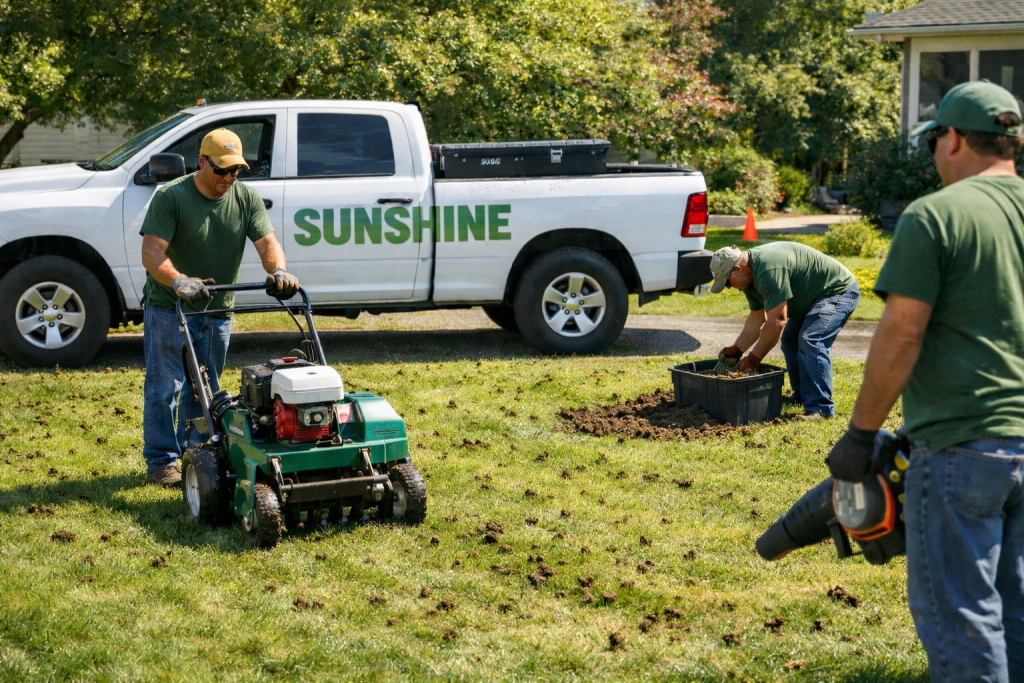
Winnipeg soil often contains heavy clay. Snow compaction during winter can make soil dense and limit oxygen reaching roots.
Core aeration creates small holes in the soil, improving:
• drainage
• oxygen flow
• nutrient absorption
5. Overseeding
Bare areas benefit from overseeding.
Spread grass seed across thin patches and lightly cover with soil or compost. Spring moisture helps seeds germinate quickly.
6. Fertilizing
Early fertilizer supports root recovery after winter stress.
Use slow-release fertilizer appropriate for cool-season grass varieties common in Manitoba.
For many homeowners in Winnipeg, spring yard cleanup can involve:
• hauling branches
• raking debris
• removing winter debris and hauling heavy yard waste to a landfill site
That’s when hiring professionals can make sense.
Sunshine Maintenance & Landscaping provides professional spring yard cleanup services across Winnipeg and surrounding communities.
Reach out by call or text to: 204-229-9789 or click here to submit your information today to arrange a “no obligation” introductory phone call. We look forward to helping you transform your yard.
We're in your neighbourhood and we're ready to help! No job is too big or too small.
5. Garden Bed Preparation
Lawn care is only one part of spring yard preparation.
Garden beds also require attention after winter.
Reliable & Affordable Planting Bed Construction
Remove Winter Debris
Dead stems, leaves, and branches should be removed to make space for new growth.
Compost healthy organic material when possible.
Loosen Soil
Soil compacts during winter.
Use a garden fork or shovel to loosen the top few inches. This improves root growth and water absorption.
Add Compost or Topsoil
Organic matter improves soil structure and nutrients.
Winnipeg’s clay-heavy soil benefits greatly from compost amendments.
Edge Garden Beds
Clear edges give landscaping a clean appearance.
Edging also prevents grass from spreading into planting areas.
Apply Mulch
Mulch helps retain moisture, regulate soil temperature, and suppress weeds.
Common options include bark mulch or wood chips.
6. Seeding, Topsoil & Aeration Timing
Timing these steps correctly helps lawns recover quickly after winter.
Seeding
Cool-season grass varieties grow well when temperatures range between 10–20°C.
Late April or early May is often ideal.
Topsoil
Adding a thin layer of topsoil improves seed contact with soil.
Spread evenly across thin patches.
Aeration
Aeration works best once soil has dried slightly but before summer heat arrives.
Most homeowners perform aeration once per year, often in spring or fall.
7. Common Mistakes to Avoid
Many homeowners work hard in spring but accidentally harm their lawn.
Avoid these common mistakes.
Starting Too Early
Walking on saturated lawns compacts soil and damages grass roots.
Wait until soil dries slightly before heavy activity.
Over-Raking
Aggressive raking can tear healthy grass shoots.
Use gentle strokes.
Cutting Grass Too Short
When mowing begins, keep blades relatively high.
Longer grass protects soil and encourages deeper roots.
Ignoring Drainage Problems
Snowmelt sometimes reveals drainage issues.
Standing water should be addressed quickly before lawn damage spreads.
8. The Realities of Winnipeg Spring Yard Preparation

Spring yard work can be rewarding.
Fresh air, sunlight, and visible progress make outdoor work satisfying.
However, the reality is that some tasks require significant effort.
Large piles of branches may need hauling. Wet leaves can become heavy. Debris from winter storms often fills multiple yard waste bags.
Many Winnipeg homeowners prefer the convenience of seasonal property maintenance programs where spring cleanup is included in a package along with:
• weekly lawn mowing
• aeration
• edging
• applying mulch
• adding topsoil and seed as needed
• pulling weeds
• tree trimming and pruning
This approach removes the stress of seasonal yard work while keeping properties looking their best throughout the year.
9. What Areas Does Sunshine Maintenance and Landscaping Serve?

We’re in your neighbourhood and we’re here to help.
We also regularly do landscaping and lawn care work in the communities of:
• East St. Paul
• West St. Paul
• St. Norbert
• St. Adolphe
• La Salle
• Grand Pointe
• Headingley
• Oakbank
• Oak Bluff
10. Why Choose Sunshine?
Choosing the right landscaping contractor is crucial. Here’s what sets us apart as a leader in Landscaping Winnipeg services:
✅ 30+ Years Local Experience: Deep knowledge of Winnipeg’s soil and climate.
✅ Full-Service Provider: One call for all your lawn and landscape needs.
✅ Quality Craftsmanship: Premium materials and proven techniques.
✅ Reliable & Professional: Insured, courteous crews who communicate clearly.
✅ Click the links below for more information about Sunshine being recognized as Best in Winnipeg.
✅ Recognized as a "Best in Winnipeg" Landscaping contractor
✅ bestinwinnipeg.com/best-lawn-



Want a yard that looks great without spending your weekends doing heavy work?
The team at Sunshine Maintenance & Landscaping provides:
- Full Landscaping Design & build
- Hardscaping
- Planting
- Spring & fall cleanup
- Lawn care services
- Lawn Aeration
- Top soil & seed
- Garden care
- Garden bed construction & preparation
- Residential & Commercial snow removal
- Commercial parking lot litter removal
- Tree Care
- Tree planting
- Sod installation
11. Our Blog Articles
We believe education helps homeowners make better decisions. Our blog supports our readers with practical advice.
Popular topics include:
We regularly publish practical advice tailored to Winnipeg conditions. These resources support homeowners who want to understand their options before investing in upgrades.
12. Winnipeg Lawn, Garden & Landscape Pricing (2026 Guide)
At a glance: Winnipeg Landscaping & Lawn Care Costs
Here are typical price ranges for professional services in Winnipeg to help you visualize your project budget:
-
Lawn Maintenance: Basic mowing typically ranges from $30 to $60 per visit.
-
Monthly Lawn Programs (full service): $170 to $400 during the growing season .
-
Spring & Fall Cleanups: $200 to $600 per cleanup, depending on your property size and debris.
-
Interlocking Pavers: For patios, walkways, or driveways, Winnipeg homeowners usually pay between $15 to $30 per square foot (installed).
-
Full Landscape Installation (Design & Build):
- Small Yard Transformations: $5,000 to $15,000
- Full estate installations (hardscaping/planting): $20,000 to $35,000+
* Please Note: these are average ranges. Final costs depend on property specifics, material choices, and project complexity. Contact us for a personalized quote
Book now before spots Fill Up.
Serving Winnipeg Homeowners & Property Managers for more than 30 Years
13. FAQs About Spring Yard Work in Winnipeg
Q1. “I’ve heard I shouldn’t walk on my lawn in the spring. How do I know when the soil is actually ready for me to start my ‘workout’ without ruining it?”
A: This is the most common trap for enthusiastic Winnipeg homeowners. You see the sun, the snow is gone, and you’re ready to burn those calories. But stepping onto saturated, thawing soil is one of the fastest ways to undo months of winter dormancy.
The "Mud Test" vs. The "Compaction Clock"
The blog mentions waiting for the soil to dry, but here’s how to know for sure. Don’t just look at the surface. Winnipeg’s heavy clay soil acts like a sponge. After the snow melts, the ground is often fully saturated several inches down. Walking on it compresses the pore space, essentially creating a concrete-like layer that grass roots can’t penetrate.
Here’s your test: The Squeeze Test. Grab a handful of soil from about 2–3 inches deep. Squeeze it in your palm.
If water drips out or it forms a muddy ball that doesn’t crumble: The soil is too wet. You risk compaction and creating ruts.
If it crumbles easily when you poke it: You’re ready to go.
The "Workout" Hierarchy
Even when the soil passes the test, your activity level matters. Think of your spring workout in phases:
Phase 1 (Gentle Cardio): Use a plastic leaf rake for light debris. Avoid steel tines or heavy stomping. This is about getting your heart rate up without compacting the root zone.
Phase 2 (Strength Training): Wait for a few dry, breezy days (usually late April to early May) for heavy digging, core aeration, or hauling branches. The soil will be firm enough to support your weight and the mechanical stress of shoveling.
If you start your "yard workout" too early, you aren’t just wasting energy—you’re creating a problem (compaction) that will require expensive aeration to fix later. Listening to the soil is the first and most important rep of your spring routine.
Q2. “My lawn has patches of grayish, web-like fuzz. Is this just leftover snow mold, and will raking aggressively take care of it?”
A: That fuzzy growth is likely snow mold, a common fungal disease in Winnipeg lawns that developed under the snowpack. While the blog mentions snow mold as a thing to look for, it doesn’t detail the danger of how you handle it.
Why Aggressive Raking is a Mistake
Your instinct might be to vigorously rake that grayish patch to “get rid of it” as part of your workout. This is one of the fastest ways to kill that section of your lawn. Snow mold is a surface-level issue. If you rake aggressively, you will tear out the tender, living crowns of the grass that are trying to recover.
The Correct "Recovery Workout"
Treat this as a delicate recovery exercise rather than a high-intensity burn.
The "Grooming" Rake: Use a light, gentle, bamboo or fan rake. The goal isn’t to rip out the fuzz, but to stand the grass blades upright and increase airflow. Think of it as a light stretching routine for the lawn.
Sunlight as Medicine: The key to killing snow mold is simply exposing the affected area to sunlight and air. Once the grass dries out, the fungus dies naturally.
The Waiting Game: If you aerate and overseed too early (before the soil hits about 13°C), you can actually spread the fungal spores to healthy parts of your yard.
Instead of burning 500 calories trying to eradicate the mold with a steel rake, focus on a lighter task (like 250 calories of gentle grooming) and let the Winnipeg sun do the heavy lifting. If the patches are large or persistent, that’s usually a sign that professional aeration and a targeted fungicide application might be more effective than a DIY cardio session.
Q3. “If I’m burning 1000 calories doing this myself, why would I ever pay for a professional spring cleanup?”
A: This question gets to the heart of the "workout vs. workload" dilemma. The blog touches on calories burned, but it doesn’t quantify the "hidden calories"—the time, logistics, and physical strain that don’t show up on a fitness tracker but absolutely impact your spring.
The "Hidden Calories" of DIY
When you hire a professional, you aren’t just paying for the raking; you’re paying for the infrastructure that makes the 1000-calorie burn possible for you without the burnout.
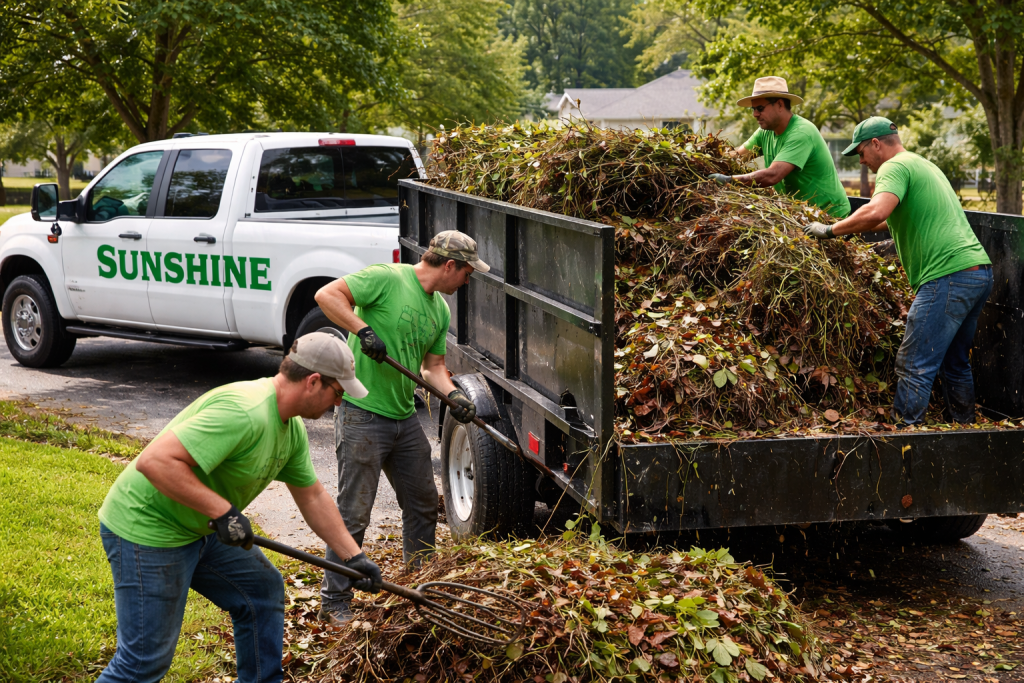
The Haul: You might burn 400 calories raking, but you’ll burn another 300 (and risk a back injury) loading wet, compacted debris into your personal vehicle and driving it to the Brady Road landfill or a 4R depot. Professionals have trucks and trailers designed to haul cubic yards of debris in one trip.
The Equipment Gap: A core aerator that penetrates Winnipeg’s clay soil weighs hundreds of pounds. Renting one involves hauling it, figuring out how to operate it, and returning it within a tight window. Professionals use commercial-grade equipment that does the job in 45 minutes what might take you a full weekend.
The Timing Window: The blog notes that the spring window is short (late April to mid-May). If you spend your first three nice weekends just doing the "cleanup," you miss the optimal window for aeration, seeding, and pre-emergent weed control. Professionals compress that timeline, freeing up your weekends to actually enjoy the yard you’re working so hard for.
View the calories burned as a bonus of yard work, not the primary goal. If you are spending your limited free time on logistics and heavy lifting that delays the skilled work (seeding, fertilizing), then the cost of a professional cleanup often buys you back the most valuable resource: time.
Q4. “I’m dealing with a massive pile of branches and wet leaves from the snow melt. Is there a strategic order to this mess, or do I just start anywhere to maximize my calorie burn?”
A: Facing a chaotic yard after snowmelt can be mentally paralyzing. If you just start raking randomly, you often end up moving the same pile of debris three times, burning double the calories for half the result. To maximize efficiency (and make your workout feel rewarding rather than futile), you need to follow the "High-to-Low" Principle.
The Strategic Workout Order:
Round 1: Heavy Lifting (Strength Focus - 600–1000 cal/hr): Start with the "heavyweights." This includes fallen branches, pine cones, and any debris that was buried in snowbanks. Get these into piles or a yard waste bin first. Why? Because if you rake leaves first, you’ll just have to rake them again after you’ve dragged heavy branches across the lawn. This initial phase is your high-intensity interval training (HIIT).
Round 2: The "Pulse" Rake (Endurance Focus - 400–500 cal/hr): Next, go over the lawn with a flexible rake to collect the matted leaves and dead grass (thatch). Work in straight lines, pulling toward your central pile. This is the sustained cardio phase.
Round 3: The Fine Motor Skills (Flexibility & Core - 250–350 cal/hr): Finally, switch to garden beds. Use hand pruners to cut back dead perennials and a small trowel to edge. This low-impact phase prevents the "burnout" that comes from trying to do high-intensity work in tight, delicate spaces.
The "One-Pile" Rule
The biggest rookie mistake is creating 15 small piles all over the yard. This forces you to walk miles of extra distance to collect them. Aim for one central collection point (or use a tarp as a giant “sled” to drag debris to the curb). This structured approach ensures you aren’t just burning calories—you’re strategically conquering the yard in a way that leaves it ready for the next phase of aeration and planting without backtracking.
14. Conclusion
Spring represents renewal in Winnipeg. After months of snow and cold temperatures, homeowners finally step outside to restore their outdoor spaces.
The process involves more than simple cleanup. Lawn recovery, soil preparation, seeding, and garden care all play important roles in creating a healthy landscape.
Along the way, many people discover that yard preparation doubles as a powerful workout. Tasks like raking, digging, hauling branches, and mowing grass can burn 400–800 calories per hour, making spring yard work both productive and physically rewarding.
Still, spring projects can quickly grow larger than expected.
Branches need hauling. Debris piles grow. Soil preparation requires effort. For many homeowners balancing busy schedules, these tasks compete with work, family time, and other responsibilities.
That’s why seasonal maintenance programs continue to grow in popularity across Winnipeg neighbourhoods.
Instead of tackling every job themselves, homeowners choose a reliable landscaping partner who handles spring cleanup, lawn care, and garden maintenance throughout the season.
Sunshine Maintenance & Landscaping helps Winnipeg homeowners enjoy attractive outdoor spaces without the stress of managing every detail.
Planning spring yard preparation this year?
Sunshine Maintenance & Landscaping provides professional spring yard cleanup services across Winnipeg and surrounding communities.
Contact our team today for a quote and discover how easy it can be to keep your property looking its best all season long.
Local Winnipeg landscaping professionals committed to quality service and dependable results.
Call today or request a quote online.
To take the next step: call or text 204-229-9789 or click here to contact us today to arrange a “no obligation” introductory phone call and let’s explore how we might be able to help you.
Serving Winnipeg Property Owners and Managers for 30 plus years. Trusted by Hundreds of local homeowners

At Sunshine, we take a great deal of pride in delivering “top-notch” service. But don't just take our word for it. Here's what our customers have to say about their experiences with us:
• Ray and his crew are outstanding. I had the pleasure of using their services with a large commercial property. The service provided, and the detail and care that went into tending to every matter, was truly remarkable. Ray was always available and quick to respond to any calls or emails. His manner and Customer Service is excellent. I would highly recommend Sunshine to anyone looking for a commercial or residential property service.
Shelly S.
⭐️⭐️⭐️⭐️⭐️
• I have been using Sunshine for a couple of years now, and without exception, it has been amazing customer care. Normal months for snow plowing and snow removal are November to March. For both years, Ray and his company have exceeded this boundary to provide great customer support, and clear our walks and back drive area. The great snowfall of October a couple of years ago, to just our most recent Manitoba snowfall. There has never been a day that snowed, that our walks weren’t cleared first thing in the morning. I would highly recommend this team!!
Michelle P.
⭐️⭐️⭐️⭐️⭐️
COMMERCIAL REFERENCES:
Hannah Mailloux, Property Manager
Capital Property Management
hannah.mailloux@capitalgrp.ca
Susan Wong, Property Manager
Karma Properties
susan@karmaproperty.ca
204-415-5712 ext. 201
Jean Reuther, Property Manager
D7 Property Management
jean@D7management.com
If Sunshine can help you, contact us to schedule a consultation:
Call or text Ray directly today: 204-229-9789
or email: ray.chastko@sunshinemaintenance.ca